Salisbury Plain Fire Today: Emergency Services Respond to Large Blaze
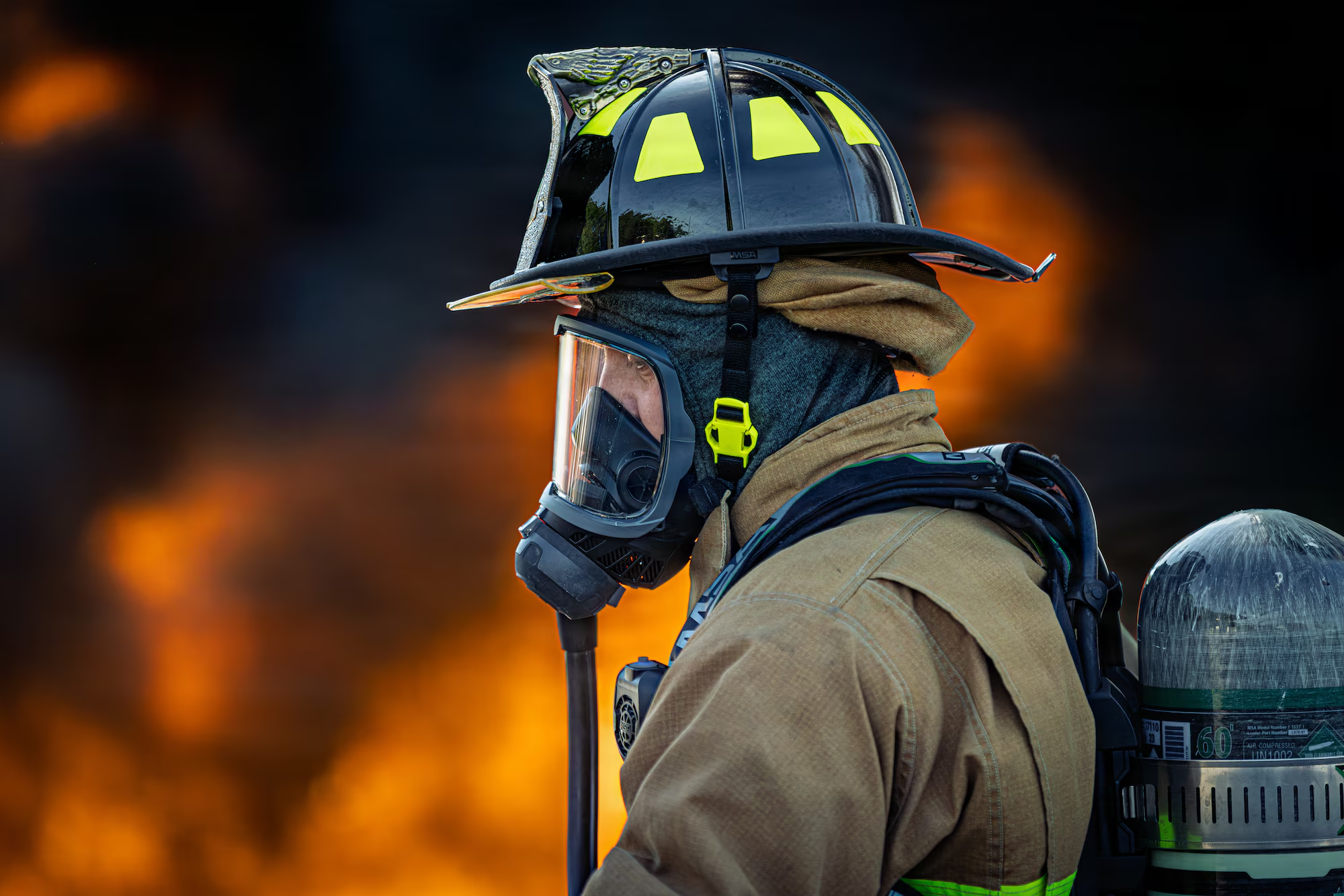
Emergency services are currently responding to a large fire reported on Salisbury Plain earlier today, with firefighters working to contain a rapidly spreading blaze across the open grassland area. The incident has prompted a significant deployment of fire crews, military personnel from the training area, and local emergency responders as efforts continue to bring the situation under control.
The fire was first reported during the day when smoke was seen rising across sections of Salisbury Plain, a vast area commonly used for military training and open land activities. Due to dry conditions and open terrain, the fire spread quickly, covering a wider area and requiring a coordinated multi-agency response.
Wiltshire Fire and Rescue Service units were among the first to arrive at the scene, quickly assessing the scale of the blaze. Additional crews were called in from surrounding stations as it became clear that the fire was extensive and required sustained firefighting efforts. Water tankers, off-road fire engines, and specialist wildfire units have been deployed to tackle the flames across difficult terrain.
Given that Salisbury Plain is also a major Ministry of Defence training area, military authorities have been working alongside emergency services to manage access, ensure safety, and assist with coordination. In some sections of the area, military personnel have helped guide firefighting operations and provide logistical support where needed.
At this stage, officials have not confirmed the exact cause of the fire. Investigators will likely examine whether it was the result of training exercises, accidental ignition, environmental conditions, or another factor. Salisbury Plain is known for occasional fire outbreaks, particularly during warmer months when vegetation becomes dry and more vulnerable to ignition.
Firefighters have been focusing their efforts on creating containment lines to prevent further spread of the blaze. Controlled backburning techniques and firebreaks may also be used in certain areas to limit fuel and slow the fire’s progress. Aerial support, including helicopters equipped with water buckets, may be deployed if conditions require additional assistance from above.
Local residents in nearby villages have reported seeing large plumes of smoke visible from several miles away. While the fire is primarily affecting open land, authorities have reassured the public that there is currently no immediate threat to residential properties. However, precautionary monitoring is ongoing in case wind conditions shift or the fire expands further.
Roads and access routes near affected areas have been temporarily restricted to allow emergency vehicles safe passage. Authorities have urged the public to avoid the area entirely, both for safety reasons and to ensure that firefighting operations are not disrupted. Drivers traveling near Salisbury Plain have been advised to expect possible delays and diversions.
Fire crews are continuing to work in challenging conditions, including uneven terrain and shifting winds that can influence the direction and speed of the fire. Officials have emphasized that containing a blaze of this scale requires time and coordinated effort, particularly in open countryside where natural barriers are limited.
As the situation develops, emergency services are expected to provide updates on containment progress and any changes in risk levels. Investigators will also begin assessing the aftermath once the fire is fully controlled to determine its origin and evaluate any environmental impact.
At present, the focus remains on suppression efforts and ensuring the safety of personnel working on the ground. Authorities have praised the swift response of all agencies involved and continue to monitor the situation closely.
The Salisbury Plain fire serves as a reminder of the increased risk of grassland and wildfire incidents during dry conditions, highlighting the importance of rapid response and coordinated emergency management in protecting both the environment and surrounding communities.